
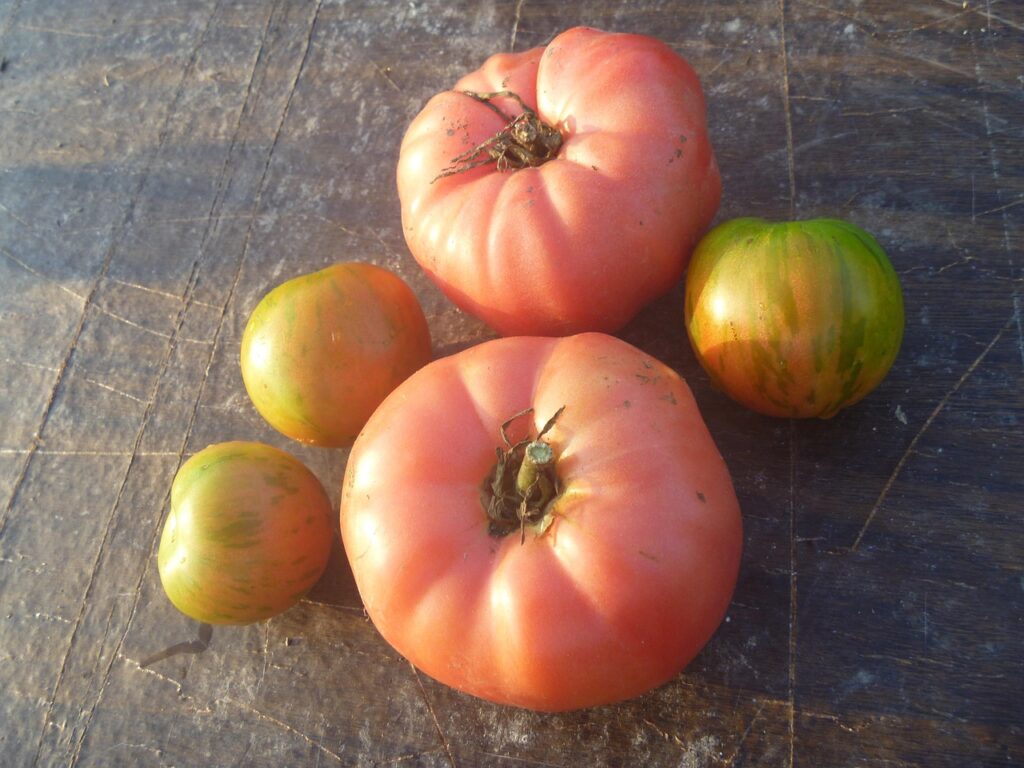
You have put in the work. You started the seeds indoors during the winter, you battled the hornworms in the spring, and you’ve kept your “diva” plants watered through the heat of July. Now, you see massive, heavy fruits hanging from the vines.
The temptation to pick them the moment they turn red is overwhelming. Do I resist? Do I pick them now?!
With most grocery store tomatoes, “red” is the only requirement. But with a Brandywine, timing is the difference between a life-changing culinary experience and a mediocre, mealy disappointment. Because these heirlooms have such a complex balance of sugars and acids, they need every possible minute on the vine to reach their full potential.
Here is your guide to mastering the art of the Brandywine harvest.
Read on for your guide to When You Should Pick Your Brandywine Tomatoes for Peak Ripeness.
1. Visual Cues: Reading the Colors
The name “Brandywine” actually refers to a family of tomatoes, and each one has a different “ready” signal. You can’t just look for “red.”
| Variety | What “Ready” Looks Like |
| Pink Brandywine | A deep, dusty rose or “raspberry” pink. If it looks pale or light pink, it’s not there yet. |
| Red Brandywine | A rich, dark crimson. It should look “blood red,” not orange-red. |
| Yellow/Gold Brandywine | A deep, pumpkin-gold or apricot hue. If it’s lemon-yellow, it will be too tart. |
Watch the Shoulders: One of the best indicators of ripeness is the “shoulders” (the area around the stem). Brandywines are famous for “green shoulders,” where the top stays green even when the bottom is red. You want to wait until those green shoulders have mostly faded into a brownish-gold or a muted version of the fruit’s main color.
2. The Touch Test: The “Ripe Peach” Rule
Color can sometimes be deceptive, especially in high-heat summers. The most reliable way to check a Brandywine is a gentle squeeze.
- The Technique: Do not poke the tomato with your fingertip (this causes bruising). Instead, cup the fruit in your hand and apply very gentle pressure with your palm and fingers.
- The Feel: A ripe Brandywine should have a slight give, similar to a ripe peach or a softened stick of butter.
- The Bottom-Up Rule: Brandywines usually ripen from the blossom end (the bottom) up to the stem. Always feel the bottom of the fruit; if it’s still rock-hard, walk away.
3. The Stem Test: The “Easy Release”
A tomato plant knows when its seeds are ready. When a Brandywine reaches peak ripeness, it develops an “abscission layer”—a fancy term for a physical break-point where the fruit meets the stem.
To test this, lift the fruit slightly and give it a very gentle twist.
- If the tomato is ready, it should “snap” off the vine almost effortlessly.
- If you find yourself tugging, pulling, or needing to use two hands, stop. The plant is still pumping sugars into that fruit. Let it finish.
4. The 100-Day Marathon
While cherry tomatoes might be ready 60 days after planting, Brandywines are notorious “slow-growers.”
Generally, you are looking at 6 to 8 weeks from the time you first see a tiny green fruit until the day you harvest. While you shouldn’t use a calendar as your only guide, it helps to manage your expectations. If it’s only been a month since the fruit set, it almost certainly isn’t ready, no matter how big it looks.
5. The Biggest Mistake: Picking Too Soon
The most common mistake gardeners make with Brandywines is picking them when they “look red enough.”
Because Brandywines have such a high volume of juice and meat, the internal chemical transformation from “starchy” to “sugary” takes longer than it does for smaller varieties.
The Golden Rule: When you think a Brandywine is perfectly ripe, wait two more days. That extra 48 hours is when the deep, smoky, wine-like undertones of the flavor profile truly develop.
The Exception: If a massive rainstorm is coming or if you see a squirrel eyeing your prize, pick it. A slightly underripe Brandywine is better than a cracked or eaten one!
6. What Happens if You Rush It?
If you pick a Brandywine too early, you have essentially wasted 100 days of gardening.
- The Texture: It will be crunchy or “mealy” rather than creamy.
- The Flavor: It will taste sharply acidic and “green,” missing that classic sweetness that makes Brandywines famous.
- The Regret: You’ll wonder why you paid so much for the seeds or spent so much time on the plants.
7. The Cracking Dilemma
As we discussed in our [Problems and Solutions post], Brandywines are prone to cracking. Often, these cracks appear right as the tomato reaches peak ripeness.
If you see a crack starting to form or widening, pick the tomato immediately, regardless of the “Two Day Rule.” Once the skin is broken, the fruit is vulnerable to fruit flies and mold. These “cracked” tomatoes are still delicious, but they must be eaten within 24 hours.
8. Can You Ripen Them Off the Vine?
If a frost is coming or the plant is dying, you may have to pick green or “blushing” tomatoes.
While you can ripen them indoors by placing them stem-end up in a cardboard box at room temperature, the flavor will never reach the heights of a vine-ripened fruit. The plant stops sending sugars to the fruit the moment the stem is cut.
9. Harvest Best Practices
To keep your harvest in pristine condition:
- Harvest in the Morning: Pick your tomatoes after the dew has dried but before the heat of the day. The fruits are most hydrated and firm in the morning.
- Handle Like Eggs: The skin is paper-thin. Do not drop them into a deep bucket where the weight of the top tomatoes will crush the ones on the bottom. Use a shallow basket and lay them in a single layer.
10. Storage Tips: The “No-Fridge” Zone
You’ve successfully harvested the perfect Brandywine. Don’t ruin it now!
- Never Refrigerate: Temperatures below 50°F destroy the flavor-producing enzymes in a tomato and turn the texture to mush. Keep them on the counter.
- Stem-Side Down (or Up?): Most experts recommend storing Brandywines stem-side up to prevent bruising the delicate “shoulders.”
- Don’t Stack: These are heavy fruits. Stacking them is a recipe for bruises and rot.
- Eat Quickly: A perfectly ripe Brandywine has a shelf life of about 3 to 5 days. But let’s be honest—they usually don’t last 20 minutes once the balsamic vinegar and salt come out.
Conclusion
Patience is the most important tool in a Brandywine grower’s kit. It is a test of will to watch a massive, beautiful tomato hang on a vine for an extra three days, but the reward is the best tomato you have ever tasted!
Remember: When in doubt, leave it out (on the vine).
Happy