
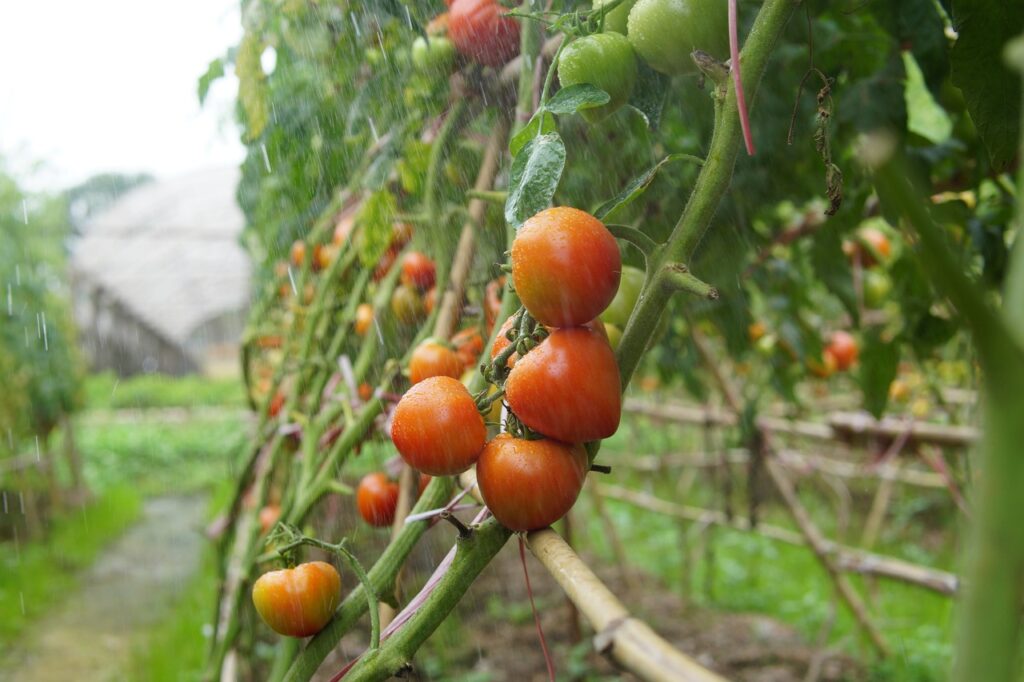
Let me be blunt: if you don’t properly support your Brandywine tomato plants, you’re setting yourself up for disappointment. This isn’t like cherry tomatoes where you can get away with a flimsy cage from the hardware store. Brandywine plants grow 6-9 feet tall, produce fruits that weigh up to 2 pounds each, and will absolutely collapse under their own weight without serious support.
I’ve seen countless gardeners lose half their harvest because branches snapped, fruits rotted on the ground, or entire plants toppled over in summer storms. Don’t let that be you.
This guide covers every support method that actually works for Brandywine, with honest pros and cons for each.
Why Brandywine Support Is Non-Negotiable
The Plant Gets Massive
Brandywine is an indeterminate variety, meaning it keeps growing upward all season long. While determinate tomatoes stop at 3-4 feet, Brandywine commonly reaches 6-8 feet, sometimes pushing 9 feet in ideal conditions. That’s a lot of plant to keep upright.
The Fruits Are Heavy
Individual Brandywine tomatoes typically weigh 10-16 ounces, with some reaching 2 pounds. When a plant produces 15-30 of these hefty fruits over the season, the combined weight puts enormous stress on branches. Without support, branches snap—often when fruits are nearly ripe and you’re days away from harvest.
The Stems Are Relatively Brittle
Compared to some tomato varieties, Brandywine stems can be somewhat brittle, especially as plants age. A strong wind or the weight of fruit clusters can cause catastrophic breakage if plants aren’t supported.
Disease Prevention
Proper support keeps foliage off the ground, improving air circulation and reducing the risk of soil-borne diseases like early blight and septoria leaf spot. When plants sprawl on the ground, disease pressure increases dramatically.
Easier Harvesting
Supported plants are easier to harvest, inspect for pests, and maintain throughout the season. You’re not crawling around trying to find tomatoes buried in a tangle of vines.
When to Install Support: Before You Plant
This is critical: install your support system at transplanting time, not later.
Once a Brandywine plant is established, its roots spread 2-3 feet in all directions. Trying to drive a stake or install a cage after the fact means you’ll inevitably damage roots, which stresses the plant and can reduce yields.
Additionally, trying to wrangle a 4-foot tall tomato plant into a cage or tie it to a newly installed stake is awkward and risks breaking branches.
Set up your support system first, then plant your seedling next to it. Easy, clean, and your plant will thank you.
Support Method 1: Heavy-Duty Stakes
This is my go-to method for Brandywine, and it’s what many experienced tomato growers swear by.
Materials You’ll Need:
- 8-foot tall stakes (1.5-2 inches diameter)
- Wood (rot-resistant like cedar), thick bamboo, or metal T-posts work well
- Soft plant ties, strips of old t-shirts, or garden twine
- Hammer or post driver
Installation: Drive your stake 12-18 inches deep into the ground, leaving 6-7 feet above ground. Position it about 4-6 inches from where you’ll plant your seedling—close enough to tie to, but not so close that the stake blocks the root zone.
Plant your Brandywine seedling on the side where prevailing winds will blow the plant toward the stake, not away from it.
Maintenance: As the plant grows, tie the main stem to the stake every 8-12 inches using a loose figure-eight pattern. The figure-eight creates a buffer between stem and stake, preventing rubbing damage. Leave enough slack that the stem can expand as it grows—you want to support, not strangle.
Check ties weekly and adjust as needed. In mid to late season when fruits are heavy, you may need to support individual fruit clusters with additional ties to prevent branch breakage.
Pros:
- Simple and proven method
- Relatively inexpensive ($3-10 per stake)
- Easy to install
- Takes up minimal garden space
- Easy to remove at season’s end
Cons:
- Requires regular tying and maintenance (every 1-2 weeks)
- Slightly more labor-intensive than cages
- Need to store stakes during off-season
Best for: Most home gardeners, market gardeners growing multiple Brandywine plants in rows, anyone who wants maximum control over plant shape.
Support Method 2: Extra-Large Cages
Not all tomato cages are created equal. The standard 3-foot wire cones at the garden center will fail spectacularly with Brandywine. You need serious cages.
What Works:
- 5-6 feet tall cages made from heavy-gauge wire
- Concrete reinforcing wire (6×6 inch mesh, 10-gauge or heavier)
- Heavy-duty welded wire cages designed for indeterminate tomatoes
- DIY cages made from livestock panels cut to size
DIY Cage Construction: If you’re handy, you can make excellent cages from concrete reinforcing wire (sold in rolls at home improvement stores). Cut a 5-6 foot length, form it into a cylinder about 18-24 inches in diameter, and secure the ends with wire or zip ties. You’ll get a cage that costs $8-15 and lasts for decades.
Installation: Place the cage over your transplanted seedling, pushing the legs 6-8 inches into the soil. For extra stability in windy areas, drive a stake through the cage into the ground.
Maintenance: Minimal. As the plant grows, tuck wayward branches back inside the cage. You may need to tie particularly heavy fruit clusters to the cage wires for support. That’s about it.
Pros:
- Set it and mostly forget it
- Less weekly maintenance than staking
- Supports the entire plant structure
- Very stable in wind
- Can be reused for many years
Cons:
- More expensive upfront ($15-30 per cage)
- Bulky to store during off-season
- Takes up more horizontal space in the garden
- Harder to reach inside for pruning or harvesting
- Can’t be installed after planting
Best for: Gardeners who want low-maintenance support, those with plenty of garden space, anyone growing Brandywine in permanent raised beds where cages can stay in place.
Support Method 3: Florida Weave (Basket Weave)
This method shines when you’re growing multiple Brandywine plants in a row, making it popular with market gardeners.
Materials You’ll Need:
- Sturdy posts (4×4 wood or T-posts) every 4-6 feet along the row
- Heavy-duty twine or baling wire
- Clips or staples to secure twine to posts
How It Works: Drive posts at each end of your tomato row and every 4-6 feet in between. As plants grow, weave twine horizontally between posts, alternating sides of the plants. Start 8-12 inches above ground and add new levels every 8-12 inches as plants grow taller. The twine sandwiches the plants between two horizontal lines, holding them upright.
Installation: Set posts before planting. Space Brandywine plants 24-36 inches apart within the row. Begin weaving twine once plants are 12-18 inches tall, adding new levels every 1-2 weeks throughout the season.
Maintenance: Add new twine levels regularly. Tuck plants back between the twine lines as they grow. The system requires ongoing attention but supports many plants efficiently.
Pros:
- Excellent for multiple plants in rows
- Very cost-effective per plant when growing many
- Strong support for heavy fruit loads
- Professional appearance
- Keeps fruits off the ground
Cons:
- Only practical for row plantings (not individual plants)
- More setup complexity than stakes
- Time-consuming to install and maintain
- Requires learning the technique
- Permanent posts take up space
Best for: Market gardeners, anyone growing 4+ Brandywine plants in a row, those who want a clean, organized tomato bed.
Support Method 4: Trellis Systems
For the serious tomato grower, permanent trellis systems offer the ultimate in plant support.
Types of Trellises:
Vertical String Trellis: Posts at each end of a row with overhead support (wire or wood beam). String hangs from above, and plants are trained to grow up the string using the “lean and lower” or “single stem” method. This is how commercial greenhouse tomatoes are grown.
A-Frame Trellis: Two angled panels meeting at the top, creating a tent-like structure. Plants grow up both sides. Beautiful and functional but requires significant carpentry.
Permanent T-Post Structure: Strong T-posts with horizontal wire or wood supports at multiple heights. Functions similarly to Florida weave but with permanent infrastructure.
Installation: Requires significant upfront investment in materials and time. Posts must be set deeply (2-3 feet) or secured in concrete. Overhead structures need to support the weight of multiple fully-loaded tomato plants—we’re talking 50+ pounds per plant.
Maintenance: Once built, maintenance involves training plants up strings or wires, similar to staking. The structure itself should last many seasons.
Pros:
- Maximum support capacity
- Professional, attractive appearance
- Works for many plants efficiently
- Lasts for many years
- Excellent for serious growers
Cons:
- High initial investment ($100-500+ depending on size)
- Requires construction skills or hiring help
- Permanent (or semi-permanent) structure
- Overkill for small gardens
- Takes significant space
Best for: Market gardeners, dedicated tomato enthusiasts with 10+ plants, anyone who wants a permanent tomato growing area, high-yield production goals.
What Doesn’t Work for Brandywine
Learn from others’ mistakes and avoid these inadequate support methods:
Standard Tomato Cages from Big Box Stores
Those 3-foot tall, thin wire cones collapse under Brandywine’s weight by mid-season. They’re designed for determinate varieties, not massive indeterminate heirlooms. Save your money.
Short Stakes (Under 6 Feet)
The plant outgrows them by late July, leaving the top portion unsupported precisely when it’s heaviest with fruit. You’ll end up with broken branches and regret.
Unsecured or Loose Support
Any support that isn’t firmly anchored will topple over. I’ve seen entire cage-and-plant combos blown over in summer storms. Drive stakes deep, anchor cages well, and secure everything properly.
Supporting After Growth
Trying to retrofit support around an established plant damages roots and often breaks branches. It’s too late once the plant is 3 feet tall. Plan ahead.
Installation Tips for Success
Depth Matters
Stakes need to go 12-18 inches deep. Cages need 6-8 inches of leg depth plus stakes driven through them in windy areas. Shallow installations fail.
Position Strategically
Place stakes on the side where prevailing winds will blow the plant toward the support, not away from it. For most of North America, that’s the north or west side of the plant.
Start Early, Tie Often
Begin tying plants to stakes when they’re just 12 inches tall. Add new ties every 8-12 inches of growth. Frequent tying prevents plants from leaning so far they can’t be straightened without breaking.
Use Soft Ties
Strips of old t-shirts, soft plant ties, or even pantyhose work better than wire or hard twine that can cut into stems. The figure-eight pattern is crucial—it protects the stem while providing support.
Support Fruit Clusters
When you see clusters developing 4-6 large tomatoes, consider tying those clusters to your support structure to prevent branch breakage. Heavy fruits on long branches create a lot of leverage.
Real-World Example: My Setup
For my Brandywine plants, I use 8-foot hardwood stakes driven 18 inches deep. I plant the seedling 6 inches from the stake and begin tying when the plant reaches 12 inches. Every Sunday morning, I walk through with soft plant ties and secure any new growth.
By mid-season, each plant has 5-7 ties from bottom to top. When fruits begin sizing up, I add individual support ties for any cluster that looks heavy. Total investment: about $5 per plant in stakes and ties. Total time: 5 minutes per plant weekly.
This method has never failed me. Branches stay supported, fruits stay off the ground, and I harvest every tomato without loss to breakage. It’s not fancy, but it works.
The Bottom Line: Don’t Skimp on Support
Brandywine tomatoes require real support, period. You’ll spend $5-15 per plant for adequate support materials, and it’s the best money you’ll spend in your tomato growing journey.
Think of it this way: you’re investing 3-4 months growing these plants. You’re dedicating prime garden space to them. You’re watering, feeding, and caring for them all season. Why would you risk losing your harvest to broken branches or toppled plants because you skipped a $7 stake?
Proper support protects your investment, maximizes your harvest, and makes the entire growing season easier and more enjoyable.
Ready to grow Brandywine tomatoes the right way? Get your Brandywine seeds here and plan your support system before planting day. Your future self—and your tomato plants—will thank you.
Related Reading:
- How to Grow Brandywine Tomatoes: Complete Guide
- Brandywine Tomato Yield: How Many Pounds Per Plant?
- Brandywine Tomato Problems and Solutions
- Starting Tomato Seeds Indoors